What Is Kitchen Workflow and How Can You Improve It?

Time:2026-10-01 Author:Isabella
0%

A well-designed kitchen is not merely attractive; it should support movement, preparation, cooking, cleaning, and communication. Kitchen workflow describes how people and materials travel through the room. When that path is poorly planned, a refrigerator door can block the oven, or dirty plates can cross the food-preparation area.

Kitchen designer Mick De Giulio has said, “The kitchen is the most important room in the house.” That idea matters because kitchen performance affects everyday comfort. A practical plan places the refrigerator, sink, and cooktop within easy reach. It also provides clear landing space beside major appliances. Small details matter. A drawer for knives near the preparation surface saves repeated steps. Strong lighting over the worktop reduces shadows. Waste bins near the sink can simplify cleanup.

This guide explores how to improve kitchen functionality and workflow through realistic design decisions. It considers work zones, storage height, traffic patterns, appliance placement, and the needs of different users. A household with children may need safer access and wider circulation. A serious home cook may need deeper counters and more accessible tools.

There is no perfect kitchen.

Even professional layouts can fail when daily habits change. A beautiful island may become a crowded storage shelf. An efficient triangle may feel restrictive in a busy household. Improvement requires observation, not assumptions. Track where people pause, reach, turn, and collide during normal cooking. Then adjust the design around those facts. Better workflow is usually created through several modest changes, not one expensive renovation.
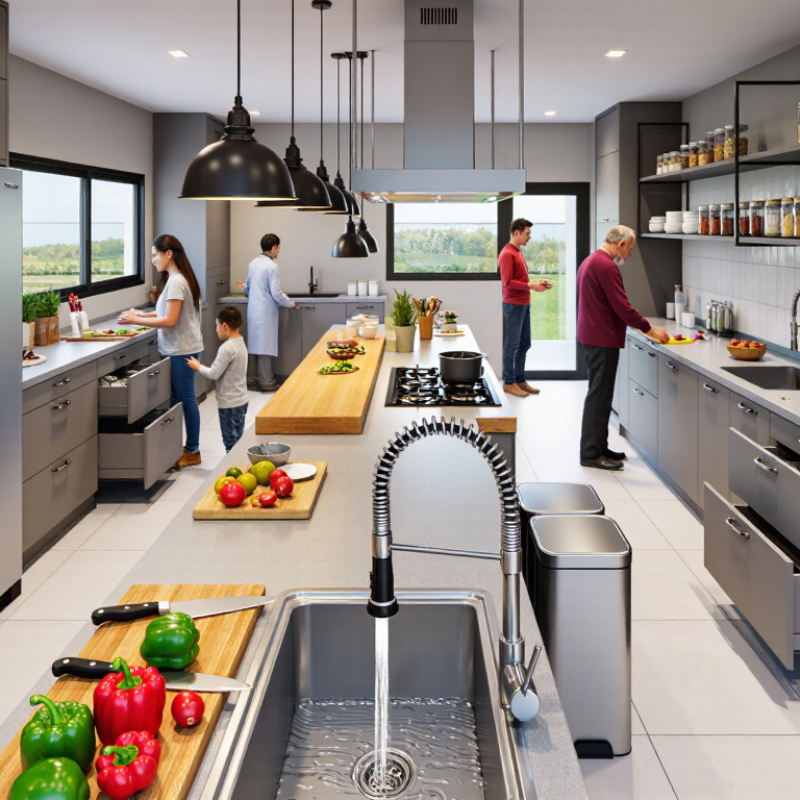
What Is Kitchen Workflow and How Can You Improve It?

Kitchen Workflow: Definition, Purpose, and Core Principles

Kitchen workflow is the planned movement of people, ingredients, tools, and information. It determines how food travels from storage to preparation, cooking, plating, and service. A strong workflow reduces unnecessary steps and helps staff maintain consistent quality during busy periods.

Its purpose is practical: save time, protect food safety, and prevent avoidable mistakes. Core principles include clear sequencing, organized stations, accurate communication, and flexible timing. For example, placing frequently used knives near the preparation bench can shorten movement and reduce clutter. Labelled containers also make stock rotation easier and limit confusion during service. Timing matters.

In my experience, the best workflow begins with observing real work, not drawing a perfect plan. Track where staff pause, reach, turn, or wait for equipment. Then adjust one problem at a time. A prep list should match the expected number of portions, while cooked items need safe holding and careful temperature checks. Communication should be brief and specific, especially when several orders arrive together. I have seen efficient layouts fail because nobody reviewed them after the menu changed. That weakness deserves attention. A workflow must improve with evidence, staff feedback, and honest reflection.

Key Zones and Movement Patterns in an Efficient Kitchen

Kitchen workflow describes how people, food, tools, and waste move through a cooking space. An efficient layout usually divides the room into clear zones: storage, preparation, cooking, serving, and cleaning.

The storage zone should sit near the refrigerator and pantry. Preparation works best beside the sink, with enough counter space for chopping and mixing. Cooking tools belong close to the cooktop or oven.

Keep it visible. Small gaps matter.

Movement should follow a simple path instead of forcing repeated backtracking. A common pattern runs from storage to preparation, then cooking, serving, and cleaning. Place knives, boards, and mixing bowls between the refrigerator and heat source.

Keep waste and rinsing points near the preparation area, but avoid blocking the main walkway. In my own kitchen planning, I have placed frequently used pans too far from the cooktop. That mistake created extra steps every evening. It looked tidy, but it worked poorly.

Testing the layout with an empty basket can reveal awkward turns. Open drawers and cabinet doors also need clearance. A narrow passage may feel acceptable on paper, yet two people can quickly collide there.

Children, older adults, and anyone carrying hot food need especially clear routes. A useful workflow is not always the most symmetrical one. Actual movement should guide the final arrangement.

How to Assess Your Current Kitchen Workflow

Assessing your kitchen workflow begins with observation, not assumptions.

Stand beside the pass during a busy service. Track ticket times, bottlenecks, repeated movements, and interruptions. Watch where cooks reach for pans, labels, or cleaning tools. Record five services, not one unusually calm evening.

The National Restaurant Association’s 2024 State of the Restaurant Industry report identifies labor costs as a major pressure for operators. This makes wasted motion especially expensive.

Create a simple workflow map from delivery to storage, preparation, cooking, plating, and washing. Measure how long each stage takes. Note duplicated tasks, unclear handoffs, and ingredients stored far from their point of use.

The U.S. Environmental Protection Agency’s 2023 wasted food report emphasizes prevention as the most effective waste strategy.

A practical audit should therefore track trim loss, expired stock, remakes, and unfinished plates. My own assessment would not be perfect. Staff may work differently when observed. Some delays also come from poor forecasting, not poor effort.

Tips:

Use a clipboard and a stopwatch. Mark every delay over two minutes. Ask cooks which task feels unnecessarily difficult. Compare their answers with your notes. Test one change, such as moving garnish containers beside the plating station. Review the result after three services.

If ticket times improve but staff become more fatigued, the workflow needs reconsideration. Efficiency should reduce friction, not simply make people move faster.

Step-by-Step Methods for Improving Kitchen Efficiency

Kitchen workflow is the path food, people, and tools follow from delivery to service. A clear path reduces crossing, waiting, and rushed decisions. In a working kitchen, observe one busy service before changing anything. Track where ingredients pause, where staff turn around, and where dirty pans collect. Write these points on paper. Do not trust memory alone. A five-minute observation can expose a forty-minute delay.

Create stations around the task sequence: storage, preparation, cooking, plating, and washing. Keep frequently used tools within one arm’s reach. Label shelves by ingredient type and rotate stock by date. Prepare measured ingredients before service, but avoid over-prepping fragile foods. Use a simple checklist for temperatures, equipment checks, and cleaning. Assign each task to one person, with backup during peak periods. Clear handoff language matters. “Two portions ready” beats a vague shout. Test the layout during a quiet shift, then adjust it during a busy one. Kitchens behave differently under pressure.

Review ticket times and repeated errors after each shift. Look for patterns, not blame. If plating slows, move garnishes closer or remove unnecessary steps. If washing becomes a bottleneck, add a soaking bin and schedule quick clearing intervals. Measure changes for one week before judging them. One improvement may create another problem. I once placed prep containers too close to the stove; heat softened labels and caused confusion. The fix was simple, but the mistake was avoidable. Leave room for feedback from cooks, servers, and cleaners. They notice different failures.

Tools, Habits, and Layout Changes That Support Better Workflow

What Is Kitchen Workflow and How Can You Improve It?

Tools, Habits, and Layout Changes That Support Better Workflow

Kitchen workflow is the path from storage to preparation, cooking, serving, and cleaning. A useful layout makes that path short and visible. Place knives, boards, and mixing bowls near the main preparation surface. Keep frequently used spices within one easy reach. Store heavy pans below the cooktop, not across the room. Small changes matter.

The U.S. Department of Agriculture estimates that 30–40% of the food supply is wasted. Better habits can reduce forgotten ingredients and repeated trips. Label leftovers with dates. Keep older food at eye level. Prepare a small waste bowl before chopping. It keeps scraps away from the cutting board. I still reach for the wrong drawer sometimes. That mistake shows why storage should follow real behavior, not an ideal plan.

Safety must shape the workflow too. The National Fire Protection Association reported 158,400 home cooking fires annually from 2017 to 2021. Unattended cooking was a leading contributing factor. Keep pan handles turned inward. Use a timer when switching tasks. Leave a clear landing zone beside the cooktop. Avoid placing towels near heat. A beautiful kitchen can still work badly when its surfaces are crowded. Test the arrangement for one week, then move what you repeatedly miss. Perfect layouts are rare. Observable habits are more reliable.

FAQS

What is kitchen workflow?

Kitchen workflow is the movement from storage to preparation, cooking, serving, and cleaning. A clear path reduces repeated steps.

Which zones should an efficient kitchen include?

Use storage, preparation, cooking, serving, and cleaning zones. Keep each zone visible and connected. Small gaps matter.

Where should preparation tools be stored?

Keep knives, boards, and bowls beside the main preparation counter. Store frequently used spices within one easy reach.

How can I reduce unnecessary movement?

Place heavy pans below the cooktop. Keep ingredients near their points of use. Test the layout with an empty basket.

How do I find workflow problems?

Observe several busy services, not one quiet evening. Record delays, repeated trips, blocked paths, and unclear handoffs.

What should a simple workflow audit measure?

Track preparation time, cooking time, ticket delays, remakes, expired food, and unfinished plates. Mark every delay longer than two minutes.

How can safety affect kitchen layout?

Keep pan handles turned inward. Leave a clear landing space beside heat. Store towels away from burners and hot surfaces.

How can I test a layout change?

Change one feature, such as moving garnish containers beside plating. Review the result after three services. Faster work may still create fatigue.

How should food storage support better movement?

Keep older food at eye level and label leftovers with dates. Place cleaning tools near preparation, without blocking the walkway.

Is the most symmetrical layout always best?

No. Actual movement matters more than visual balance. I still reach for the wrong drawer sometimes. That mistake deserves attention.

Conclusion

Kitchen workflow is the organized movement of people, ingredients, tools, and dishes through a kitchen. An efficient workflow reduces unnecessary steps, prevents congestion, improves safety, and supports faster, more consistent preparation. It usually depends on clear zones for storage, preparation, cooking, cleaning, and serving, with frequently connected areas positioned close together. Understanding these zones and common movement patterns helps identify delays, repeated actions, and areas where tasks overlap.

To improve kitchen efficiency, begin by observing the current workflow and noting bottlenecks, clutter, and frequently used items that are difficult to reach. Then reorganize tools and ingredients according to task frequency, create clearer work surfaces, and adjust the layout where possible. Simple habits such as preparing ingredients in batches, cleaning as you work, and returning items to consistent locations can make a significant difference. By combining thoughtful layout changes, practical tools, and disciplined routines, you can learn how to improve kitchen functionality and workflow while creating a smoother, safer, and more productive cooking environment.

Isabella

Isabella

Isabella is a dedicated marketing professional with a sharp focus on driving brand growth and engagement through strategic content creation. With an extensive background in digital marketing, she combines her passion for storytelling with her keen understanding of industry trends to deliver......